Why championing local shops and products changes everything for your community
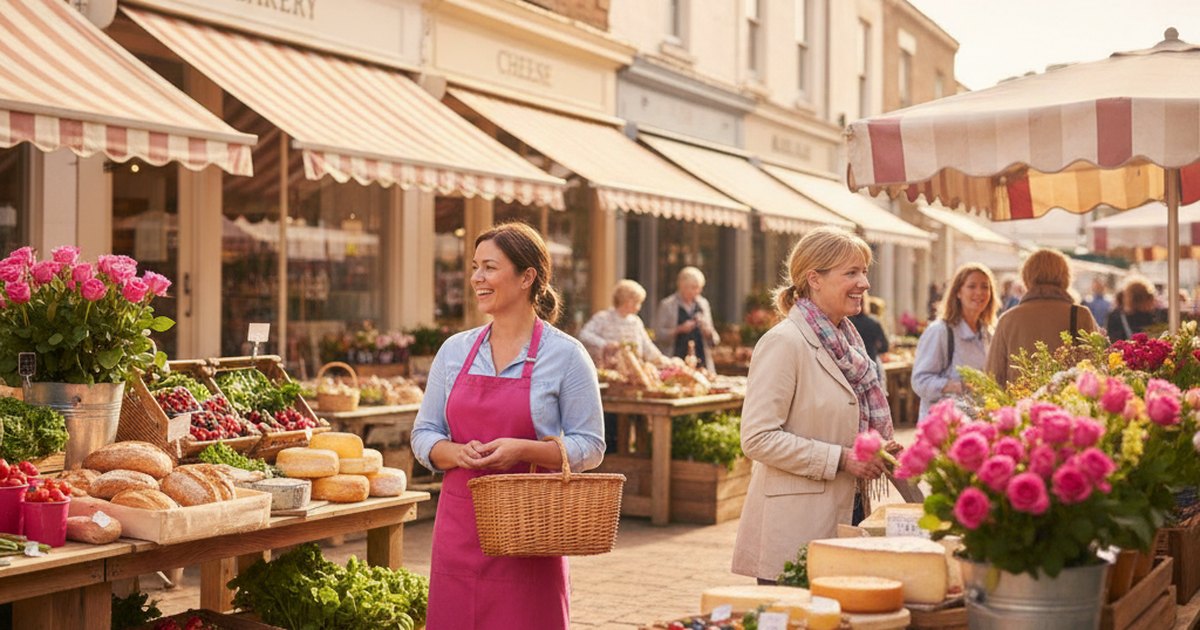
Before tapping "order" or driving to a big-box store, more and more people pause on a simple question: what if I bought closer to home? Buying local isn't a passing trend — it shapes your town's economy, the quality of what you eat and the life of your neighbourhood. And today it's customer reviews that keep this momentum alive. Here's why championing local shops and products genuinely changes things.
Buying local, short supply chains: what do we mean?
Buying local means favouring nearby shops and the producers of your region. A short supply chain is a sale with at most one intermediary between the producer and you — direct sales, a market stall, a neighbourhood grocer, a farm box. A proximity business is the baker, the greengrocer, the wine merchant, the local craftsperson. What they share is a shorter distance — geographic and human — between the person who makes and the person who buys.
The argument that changes everything: your local economy
Money spent locally keeps circulating locally. Studies regularly show that buying local can create up to 2.5 times more jobs in your area than the same spending at a big-box store or on imports. One regional study in Brittany found that every million euros spent through short food chains supported around ten local jobs, versus four through the conventional chain.
The reason is simple: when you buy from a nearby shop, a far larger share of your money stays on the territory — wages, local suppliers, local taxes, other shops down the street. That's the local multiplier effect: jobs that can't be offshored, lively town centres and a stronger social fabric. Every purchase is, quietly, a vote for the kind of high street you want to walk down.
Fresher, more traceable, more trustworthy products
Proximity means less time between harvest or making and your plate: more freshness, more seasonality, fewer preservatives. Buying close also means a direct relationship with the producer — you know where things come from and how they're made, which builds real confidence in what you buy. You often get better quality, sometimes a better price in direct sales, and something that big platforms can't ship: the simple pleasure of being recognised by your shopkeeper.
Fewer miles, more connection (with an honest caveat)
Short chains usually shorten transport distances, which cuts the emissions, packaging and waste tied to long-haul logistics. Here's the honest nuance, though: local isn't automatically greener. An out-of-season vegetable grown under a heated greenhouse nearby can weigh more on the planet than a seasonal one trucked from a bit further. The rule that works: local and seasonal. Beyond the environment, buying local rebuilds connection — the market, the shopkeeper who knows your name, a neighbourhood that stays alive.
Local against the giants: levelling the field
A neighbourhood shop isn't playing in the same league as an e-commerce multinational or a big-box chain. It has no million-euro ad budget, no algorithm to capture your attention, no global logistics to undercut prices. Yet it offers something the giants can never industrialise: advice from someone who truly knows their products, after-sales service with a human face, and a real presence in the life of the town. The imbalance isn't about quality — it's about visibility.
That's where everyone can act. When a customer spends thirty seconds flagging a good address, they restore a little of that balance: they give the small shop the digital storefront it can't afford. Multiplied by hundreds of residents, these gestures draw a living map of local commerce, able to rival the polished windows of the big platforms. Backing local isn't rejecting digital — it's putting digital at the service of proximity.
Local isn't only about food
We often reduce "buying local" to the Sunday market and the veg box. It's far broader. A florist, an independent bookshop, a bike repairer, a hairdresser, a wine merchant, a coffee roaster, a jewellery maker, a chef who cooks with regional produce: all of them keep the local economy alive. Buying local also means choosing an artisan for a gift rather than a standardised parcel, repairing instead of throwing away, or stepping into a shop you didn't know rather than ordering out of habit.
Every sector has its gems, often invisible because they're poorly listed online. Highlighting them — with a review, a rating, a photo — helps your neighbour find them, and gives that craftsmanship the place it deserves in the digital landscape.
A virtuous circle for the whole town
Championing local shops and products sets off a mechanism that benefits everyone and feeds itself. A happy customer leaves a review; that review reassures and attracts new customers; those customers keep the shop turning; the owner can invest, hire, broaden the offer; the neighbourhood grows more attractive, other shops move in, the streets fill up. Conversely, a hollowing-out town centre triggers a downward spiral: less footfall, closures, empty units, lost appeal.
The good news is that this virtuous circle doesn't require big means: it rests on a multitude of small daily gestures. Buying your bread from the baker rather than a vending machine, choosing the local greengrocer, recommending an address to a friend, leaving an honest review after a good purchase. Put end to end, these individual decisions shape the economy and the face of a place. Buying local is, in the end, deciding together what kind of town we want to live in.
Word of mouth has gone digital: the power of reviews
Small shops have always lived on word of mouth. Today that word is digital: roughly 95% of people buy after reading a positive review. A neighbour's review, with a photo, carries more weight than any advert. Highlighting a local product or shop through a review does two things at once: it helps other residents discover the good spot, and it gives visibility to a merchant who doesn't have the giants' ad budget. That's exactly why we let customers review both shops and specific products — and why genuine reviews matter so much for a local business.
How to buy local every day
- Favour markets and neighbourhood shops for your regular purchases.
- Ask where it comes from and choose what's in season.
- Share what you love: leave a review on the local shop or product that won you over — it's the most useful thing you can do for it.
You can see what people recommend on the reviews page and browse the city directory to find what's being said near you. A single honest review can send new customers to a small producer who deserves them.
Make local visible
Shopkeeper or producer? Create your free SmartShopAgent page and collect reviews. Customer? Share the local gems you love.
Create my page for freeFrequently asked questions
Is buying local always more expensive?
Not necessarily. Bought direct, a basket of fruit and vegetables is often cheaper than at a supermarket because there are fewer middlemen. And "price" is also measured in quality, freshness and jobs kept close to home.
Is local always greener?
Not automatically. An out-of-season product grown in a heated greenhouse can have a bigger footprint than an in-season one from a bit further away. The simple rule: choose local AND seasonal. That said, short supply chains usually cut transport, packaging and waste.
How do I find the good shops near me?
The most reliable guide is what local people say. Check the reviews of shops and products in your town, and browse the city directory to see what's being said around you.
How does leaving a review really help?
A review guides other customers and gives the shop free visibility it couldn't buy like the giants do. Around 95% of people buy after reading a positive review — your word counts.